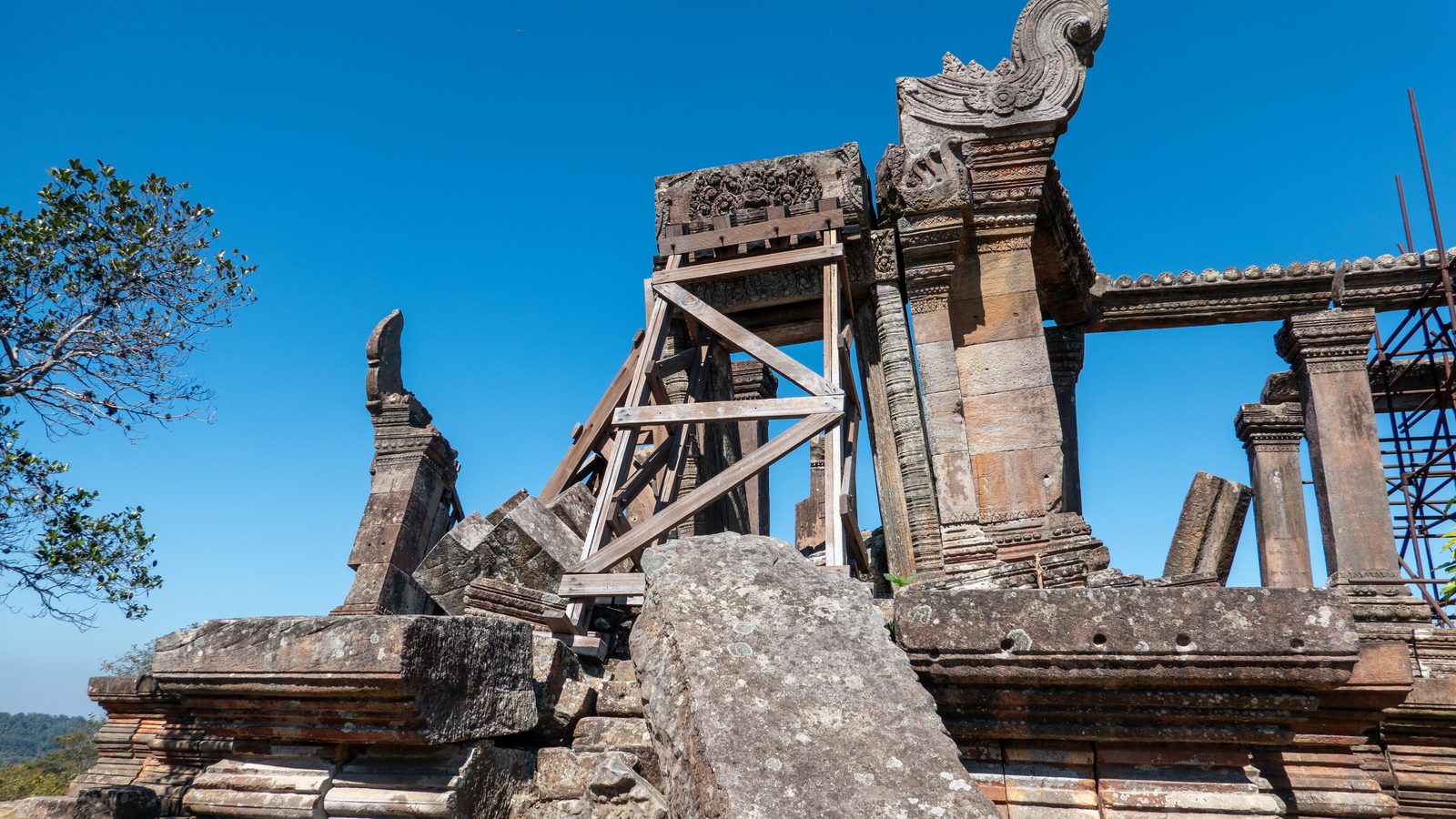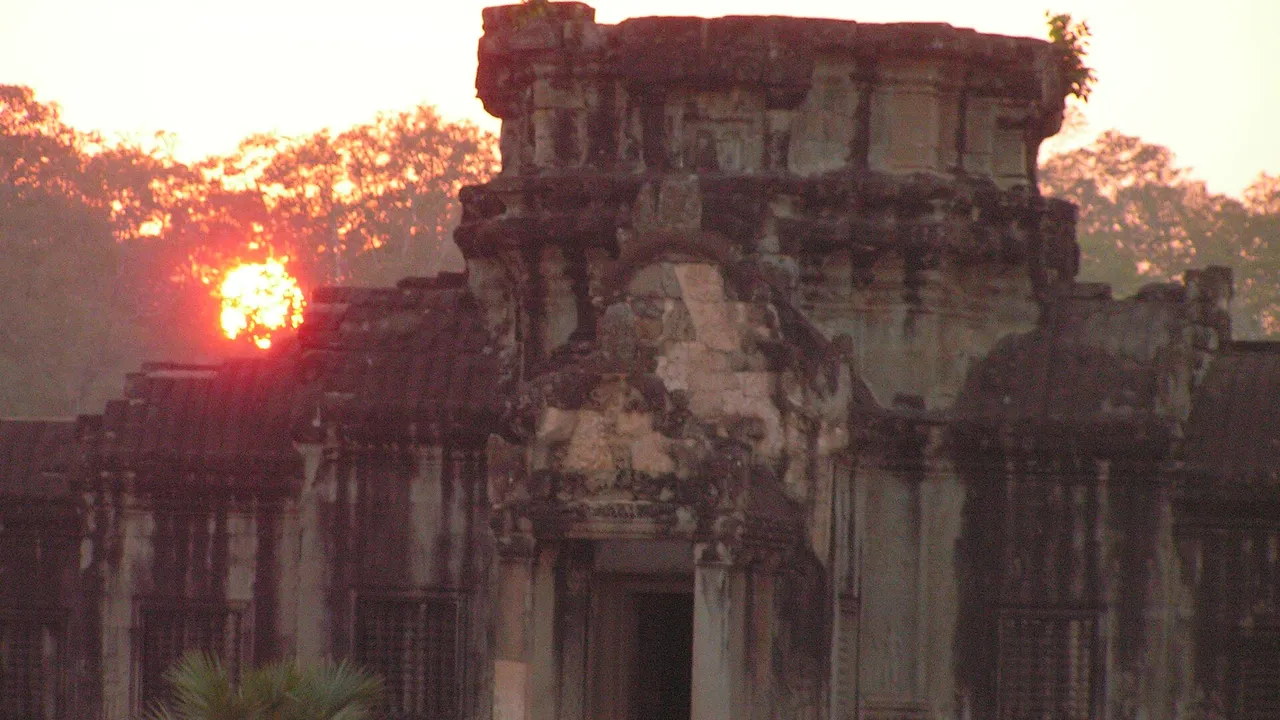
For six centuries the Khmer Empire was one of the largest and most sophisticated states in Southeast Asia. It left behind Angkor Wat, the Bayon, Ta Prohm and hundreds of other monuments scattered across Cambodia and beyond. Knowing who the kings were, what they believed and how they fed a great city makes a visit to Angkor far richer than a quick walk past carved stones.
This guide explains the empire in plain terms: the main rulers and their monuments, how water made the capital possible, how people lived, what a Chinese diplomat saw there in 1296, and how to follow the story on the ground. For the wider sweep of Cambodian history before and after, see our history of Cambodia.
The Khmer Empire at a Glance
Key Facts
Jayavarman II proclaimed himself a universal king on the Kulen plateau, the date most scholars use for the start of the Angkor period.
The kings built a series of capitals near today’s Siem Reap, and the Angkor Archaeological Park covers more than 400 square kilometres.
Angkor Wat and the Bayon were built, and the empire reached across much of today’s Thailand, Laos and southern Vietnam.
The Great Kings and Their Monuments
The Founders (9th Century)
Jayavarman II set up his court in the Kulen hills and later at Hariharalaya near today’s Roluos. His successor Indravarman I, who reigned from 877, built Preah Ko in 879 and the Bakong, the first great temple mountain, around 881, together with large reservoirs. His son Yasovarman I moved the centre to the Angkor plain and built the Eastern Baray, a huge reservoir, and the temple on Phnom Bakheng.
The Tenth Century
In the early 10th century the capital briefly moved to Koh Ker. Rajendravarman II (944 to 968) brought it back to Angkor and built the East Mebon on an island in the Eastern Baray and Pre Rup in 961. In 967 the Brahmin Yajnavaraha, a royal counsellor, founded Banteay Srei, a small pink sandstone temple that is famous for its delicate carving. Jayavarman V ruled from 968, and Ta Keo, the first Angkor temple built entirely of sandstone, dates from his reign.
Suryavarman II and Angkor Wat
In the first half of the 12th century, Suryavarman II built Angkor Wat as a temple to Vishnu, with galleries of bas-reliefs showing Hindu epics and the king’s own processions and battles. It is the largest religious monument in the world and a symbol on Cambodia’s flag.
Jayavarman VII (1181 to 1219)
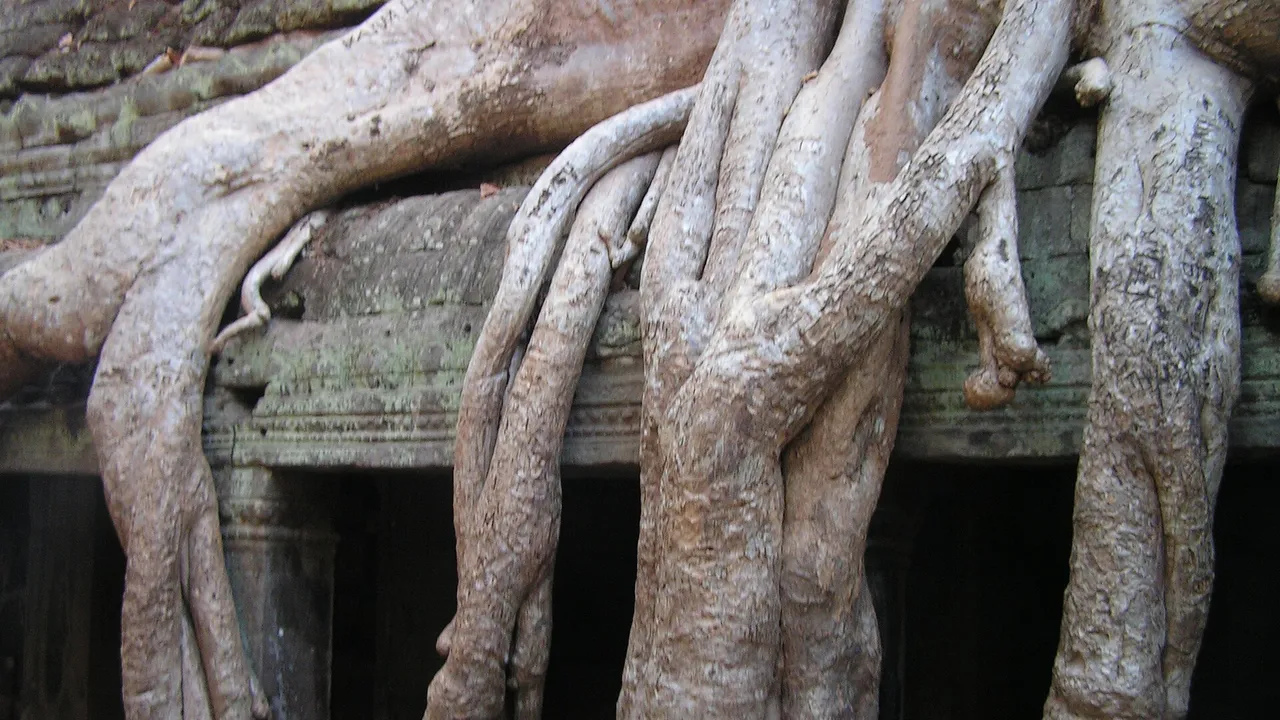
After the Cham of Champa attacked and occupied Angkor, Jayavarman VII drove them out and became king. A Mahayana Buddhist, he rebuilt the capital as Angkor Thom, with the Bayon at its centre and its towers carved with large smiling faces. He founded Ta Prohm for his mother and Preah Khan for his father, and built Banteay Kdei and Neak Pean. He also laid out roads with rest houses and, according to inscriptions, founded 102 hospitals across the empire.
Water: The Engine of Angkor
The Khmer built an extraordinary network of reservoirs (barays), canals, moats and dykes. The West Baray and the Eastern Baray stored the monsoon rains and fed rice fields in the dry season, and the moats around temples may also have helped keep groundwater stable beneath the heavy stone buildings. Researchers using airborne laser scanning (lidar) have since revealed that Angkor and the surrounding area were a far larger urban landscape than was mapped before, with roads, ponds, mounds and dense settlement beyond the main temples.
Many scholars link the long-term strain on this water system, together with shifting rainfall, to the empire’s decline in the 14th and 15th centuries, though it was one of several causes.
Religion and Power
Khmer kings ruled as divine or semi-divine figures, and each built a temple that served as both his state monument and a model of the cosmos. Early temples honoured Shiva and Vishnu, in the Hindu tradition from India. Under Jayavarman VII Mahayana Buddhism took centre stage. Later, Theravada Buddhism, the religion of most Cambodians today, spread through the country and replaced the older state cults.
Sanskrit inscriptions carved into temple doorways recorded donations and the genealogies of kings. They are one of the main sources historians use to date monuments.
Daily Life in Angkor
Most people were rice farmers living in wooden houses, which have not survived because only temples were built of stone and brick. The king, nobles, priests and temple staff made up the elite. Temples owned land and employed thousands of workers, and they acted as centres of food, medicine and education as well as worship.
Zhou Daguan’s Eyewitness Account
Zhou Daguan, a Chinese diplomat, stayed at Angkor from August 1296 to July 1297 and wrote a description of life there, A Record of Cambodia. He describes the palace, markets run largely by women, the festivals, the king’s processions and the way people ate and dressed. It is the only known written eyewitness account of Angkor at its height, and a key source for historians.
- See the Bayon, Angkor Thom and the great temples on the Angkor sunrise tuk-tuk tour.
- Add the Roluos group and Banteay Srei to a longer visit on our Cambodia tours.
- Plan tickets and timing with our Angkor Pass guide.
How to See the Story on the Ground
- Start with Roluos (Preah Ko, Bakong), the oldest big temples near Siem Reap
- Visit Pre Rup and Banteay Srei for 10th-century architecture and carving
- Spend a half day at Angkor Wat to read the bas-reliefs and understand the 12th-century state
- Walk through Angkor Thom and the Bayon to see Jayavarman VII’s Buddhist capital
- Finish at Ta Prohm or Preah Khan, built for the king’s parents
- Look for the Sanskrit inscriptions, apsara carvings and naga balustrades, which mark Khmer style
What Happened to Angkor
Angkor was never entirely abandoned. After the Ayutthaya attack of 1431 the court moved south, but monks kept using Angkor Wat, and Khmer pilgrims, then French explorers, continued to visit. The temples were restored in the 20th century and, since 1992, have been protected as a UNESCO World Heritage Site. Our Angkor Wat guide explains how to visit it today.
Tips for Understanding What You See
- Hire a licensed guide for at least one day, since context changes how the temples look
- Read the bas-reliefs in the order and direction your guide suggests
- Notice who each temple honours: Shiva, Vishnu or the Buddha
- Wear modest clothes and follow the temple rules at each site
- Spread temple days over several days to avoid fatigue in the heat
Frequently Asked Questions
When did the Khmer Empire begin and end?
It is usually dated from 802, when Jayavarman II became universal king, to 1431, when Ayutthaya captured Angkor and the court moved south.
Who built Angkor Wat?
Suryavarman II, in the first half of the 12th century, as a temple dedicated to Vishnu.
Who built the Bayon?
Jayavarman VII, a Buddhist king, who reigned from 1181 to 1219. The Bayon was the centre of his capital, Angkor Thom.
Why are there so many reservoirs at Angkor?
They stored monsoon water and supplied rice fields and the city in the dry season. The empire’s wealth depended on this water system.
Who was Zhou Daguan?
A Chinese diplomat who lived at Angkor from 1296 to 1297 and wrote the only known eyewitness account of life there, A Record of Cambodia.
Is the Khmer Empire the same as Cambodia?
Modern Cambodia is its heartland and its heir, but at its peak the empire also covered large areas of today’s Thailand, Laos and southern Vietnam.
Get Your Free Custom Cambodia Quote Today!
Tell us your dates and interests, and we will plan a private route through the Khmer temples with licensed guides who explain the story behind each monument.
See multi-day tours Explore short excursions