Cambodia is easier to understand if you know a little of its past. The temples of Angkor make sense once you know who built them, the sadness of the memorial sites in Phnom Penh is deeper once you know what came before, and the optimism of young Cambodians today is more striking when you know how recent the hardest years were.
This is a short, clear history written for travellers, not scholars. It follows the main periods, from the first kingdoms to the modern country, and points to the places where you can see each chapter. For more on living traditions, see our guide to Khmer culture.
Cambodia’s History at a Glance
Five Chapters
Funan and then Chenla were early states shaped by trade with India and China, from which Hindu and Buddhist ideas and the first brick temples came.
The Khmer Empire, founded in 802, built Angkor and ruled much of mainland Southeast Asia until the capital moved south in the 15th century.
Cambodia was a French protectorate until independence on 9 November 1953.
Civil war, the Khmer Rouge regime of 1975 to 1979, Vietnamese intervention and a long civil conflict ended with the Paris Peace Agreements.
UN-supervised elections in 1993, a restored monarchy and decades of growth in tourism, garments and agriculture.
Early Kingdoms: Funan and Chenla
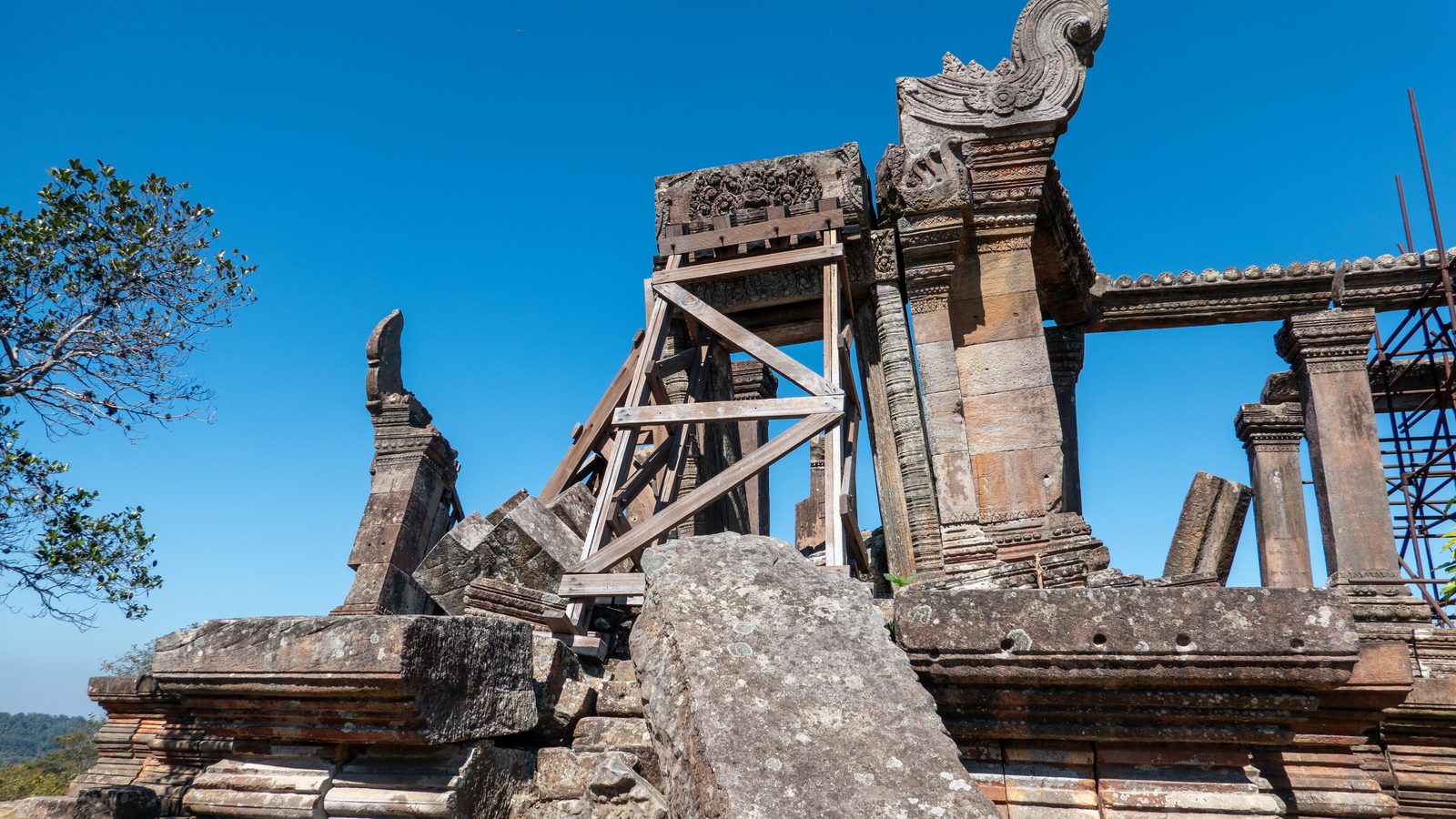
Archaeologists have found evidence of walled towns in what is now Cambodia more than two thousand years ago, with Angkor Borei in Takeo province one of the earliest known. From about the 1st to the 6th century, early states grouped under the name Funan grew in the Mekong delta and along the coast, trading with India and China. They took on Indian ideas of kingship, religion and writing, which shaped Khmer culture for centuries. In the 7th and 8th centuries, power shifted inland to kingdoms known as Chenla, which built brick temples such as those at Sambor Prei Kuk.
The Khmer Empire and Angkor
The Angkor period is usually dated from 802, when King Jayavarman II proclaimed himself a universal ruler in the Kulen hills, to 1431. Over these centuries the Khmer kings built a network of reservoirs, canals and roads, and a series of capitals around today’s Siem Reap.
The Builders
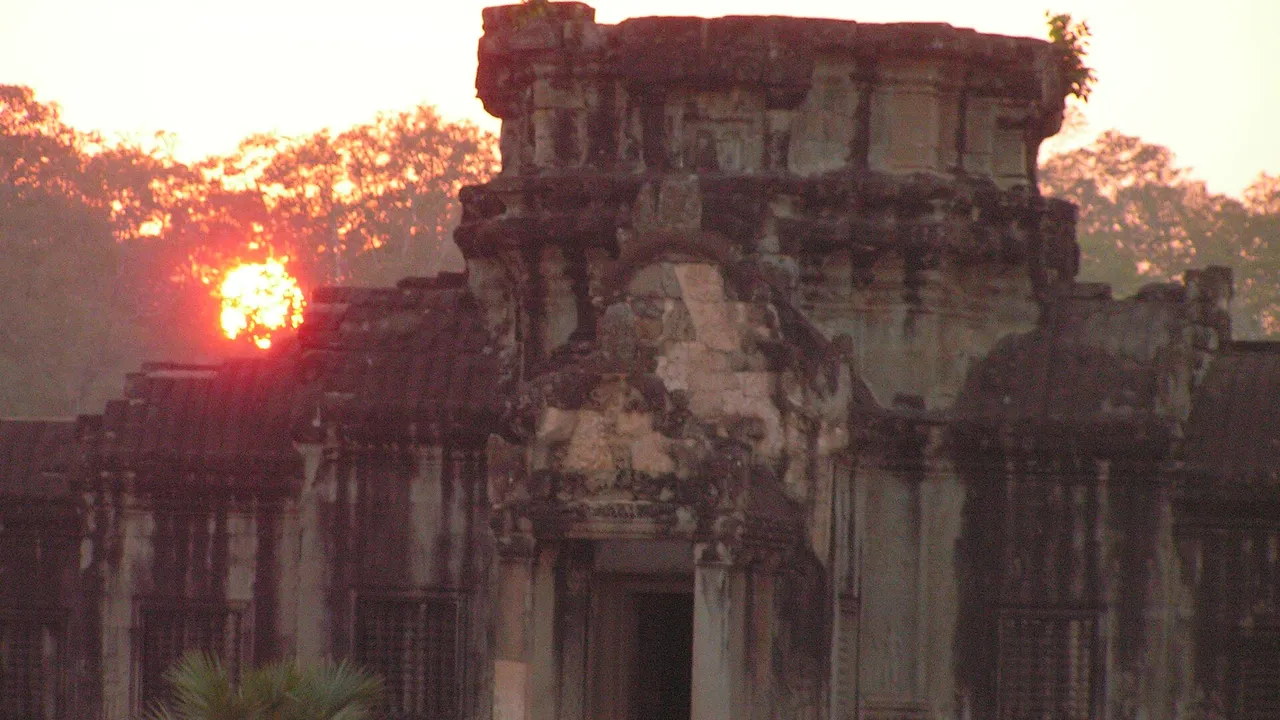
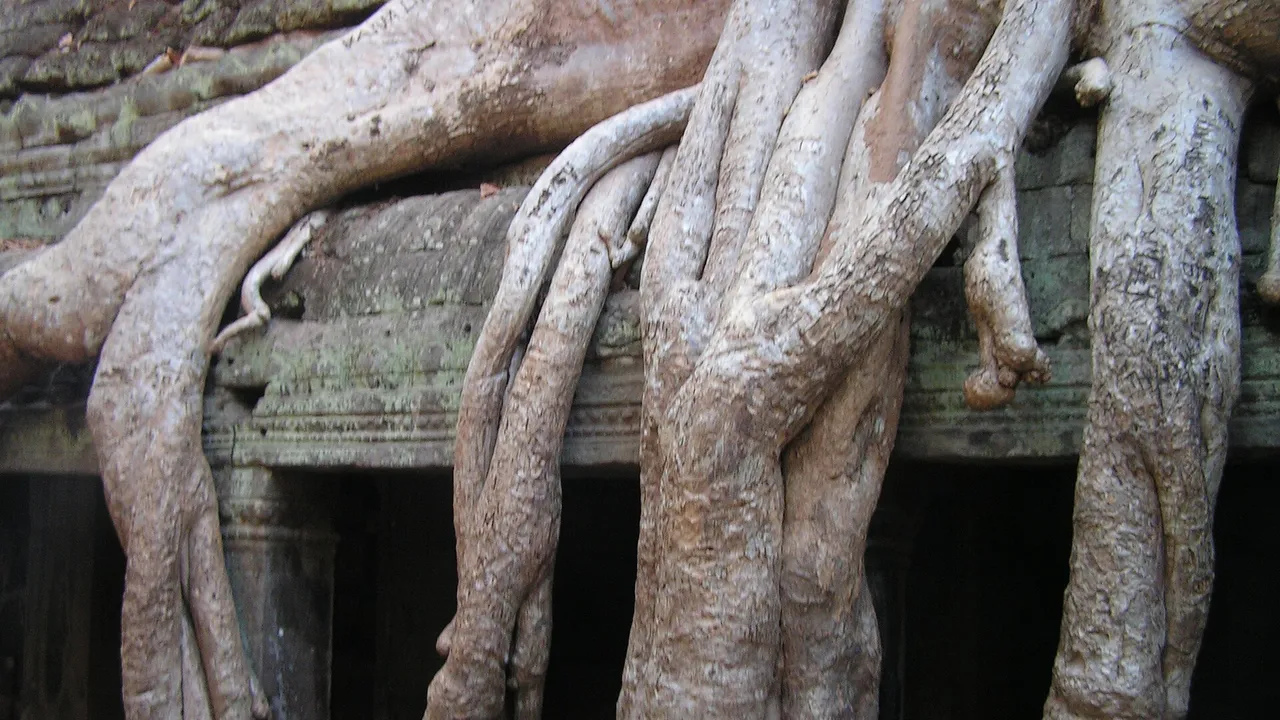
Suryavarman II built Angkor Wat in the first half of the 12th century as a temple to Vishnu. Later in the same century Jayavarman VII, a Buddhist king, rebuilt the capital at Angkor Thom, with the smiling faces of the Bayon, and founded temples such as Ta Prohm and Preah Khan. The empire at its peak reached across much of today’s Thailand, Laos and southern Vietnam.
Decline and Move South
The empire weakened through the 13th and 14th centuries because of rivalry with neighbouring kingdoms, shifting religion and environmental pressures. Ayutthaya attacked Angkor in 1431, after which the Khmer court moved south toward the area of Phnom Penh. Angkor was never forgotten. Angkor Wat stayed in use as a Buddhist monastery, and it remains a place of worship today. See our Angkor Wat guide to visit.
Between Neighbours
From the 15th century, Cambodia was often squeezed between the growing power of Siam to the west and Vietnam to the east, and lost land to both over the centuries. By the middle of the 19th century the monarchy was weak, which led King Norodom to accept French protection in 1863.
The French Protectorate and Independence
Under the French, Cambodia was part of French Indochina. The colonial period brought roads, the rubber plantations and the grand buildings that line parts of Phnom Penh, and it also drew attention to Angkor, which French scholars studied and restored. After the Second World War, King Norodom Sihanouk campaigned for independence, and Cambodia became independent on 9 November 1953, a date celebrated every year at the Independence Monument in Phnom Penh.
In the 1950s and 1960s Sihanouk led a country that looked relatively peaceful, with new architecture and a lively arts scene in the capital, but it was increasingly caught up in the war in neighbouring Vietnam.
War and the Khmer Rouge
In March 1970 General Lon Nol overthrew Sihanouk and declared a republic, and civil war spread. The Khmer Rouge, a communist movement led by Pol Pot, won the war and entered Phnom Penh on 17 April 1975. They emptied the cities, abolished money, schools and religion, and forced people into labour in the countryside. Estimates of the deaths from execution, forced labour, hunger and disease over nearly four years are at least 1.7 million.
Fighting with Vietnam grew, and Vietnamese forces took Phnom Penh on 7 January 1979, ending the regime, though Khmer Rouge forces fought on from the border for years. Today, sites such as Tuol Sleng and Choeung Ek are places of memory, and visitors are asked to behave quietly and respectfully.
Peace and Reconstruction
Vietnamese troops left in 1989, and the Paris Peace Agreements of 1991 led to the UN Transitional Authority in Cambodia, which ran from 1992 to 1993. It oversaw national elections in May 1993 and the adoption of a new constitution that restored the monarchy. Norodom Sihanouk returned as king. The Khmer Rouge movement finally collapsed in the late 1990s, and a UN-backed tribunal in Phnom Penh tried senior leaders, including a genocide conviction against Nuon Chea and Khieu Samphan in 2018.
Angkor was inscribed on the UNESCO World Heritage List in 1992, as the country was beginning to open up. King Sihanouk abdicated in 2004 in favour of his son Norodom Sihamoni, the current king, and died in 2012. Hun Sen served as prime minister for decades until August 2023, when his son Hun Manet took office.
- Walk through the Bayon and Angkor Thom on the Angkor sunrise tuk-tuk tour.
- Understand the 20th century in Phnom Penh with a guide who can give context sensitively.
- Combine the capital and Angkor on our Cambodia tours.
Cambodia Today
Modern Cambodia is young, with a large share of the population born after 1979. Phnom Penh is a fast-changing city of cafes, malls and riverside promenades, while Siem Reap lives largely from visitors to Angkor. Agriculture, garment manufacturing, construction and tourism are the main economic pillars, and the country uses the US dollar alongside the riel.
There are also current tensions to know about. Fighting broke out along parts of the Thailand border in 2025, and as of late November 2026 the land crossings between the two countries remain suspended, with governments advising against travel close to the border. Siem Reap, Angkor and Phnom Penh are far from that area and are open to visitors, but you should check your government’s advice before you go and plan to cross between Thailand and Cambodia by air.
Where to See Each Chapter
- Early Cambodia: Sambor Prei Kuk and the museums of Phnom Penh
- The Khmer Empire: Angkor Wat, Angkor Thom, Ta Prohm and Banteay Srei
- The colonial era: French-era buildings in Phnom Penh, Battambang and Kampot
- Independence: the Independence Monument in Phnom Penh
- The Khmer Rouge years: Tuol Sleng Genocide Museum and Choeung Ek, visited with respect
- Modern Cambodia: the riverside, markets and cafes of Phnom Penh and Siem Reap
Visiting With Respect
History in Cambodia is personal. Many families lost relatives in the 1970s, and older Cambodians may be reluctant to discuss it, so let people raise the subject themselves. At memorial sites, dress modestly, keep your voice low and do not pose for casual photos. If you would like to learn more, a guide who is comfortable with the subject can add a lot. See our guide to Khmer phrases for a few words that show courtesy.
Frequently Asked Questions
When was Angkor Wat built?
In the first half of the 12th century, under King Suryavarman II, as a temple dedicated to Vishnu.
When did Cambodia become independent?
On 9 November 1953, ending the French protectorate that began in 1863.
How long did the Khmer Rouge rule?
From 17 April 1975 to 7 January 1979, almost four years.
How many people died under the Khmer Rouge?
Estimates are at least 1.7 million people, from execution, forced labour, hunger and disease.
Who is the king of Cambodia today?
Norodom Sihamoni, who has reigned since 2004. The prime minister since August 2023 is Hun Manet.
Is Cambodia safe to visit given the Thailand border conflict?
The tension is concentrated along the border, where governments advise against travel. Angkor, Siem Reap and Phnom Penh are far from it, but check your government’s advice before travelling.
Get Your Free Custom Cambodia Quote Today!
Tell us your dates and interests, and we will design a private route with local guides who bring Cambodia’s history to life with care.
See multi-day tours Explore short excursions