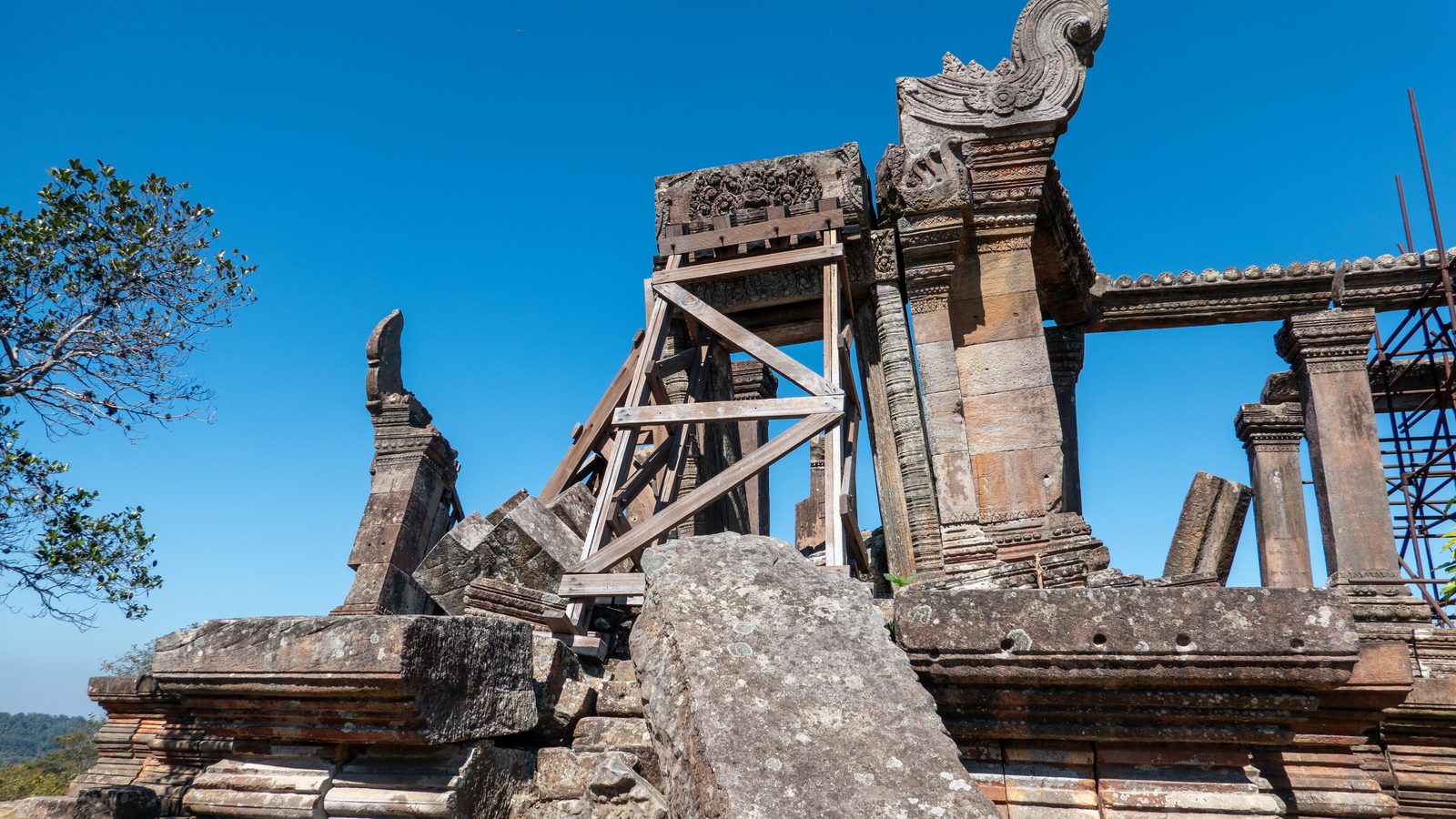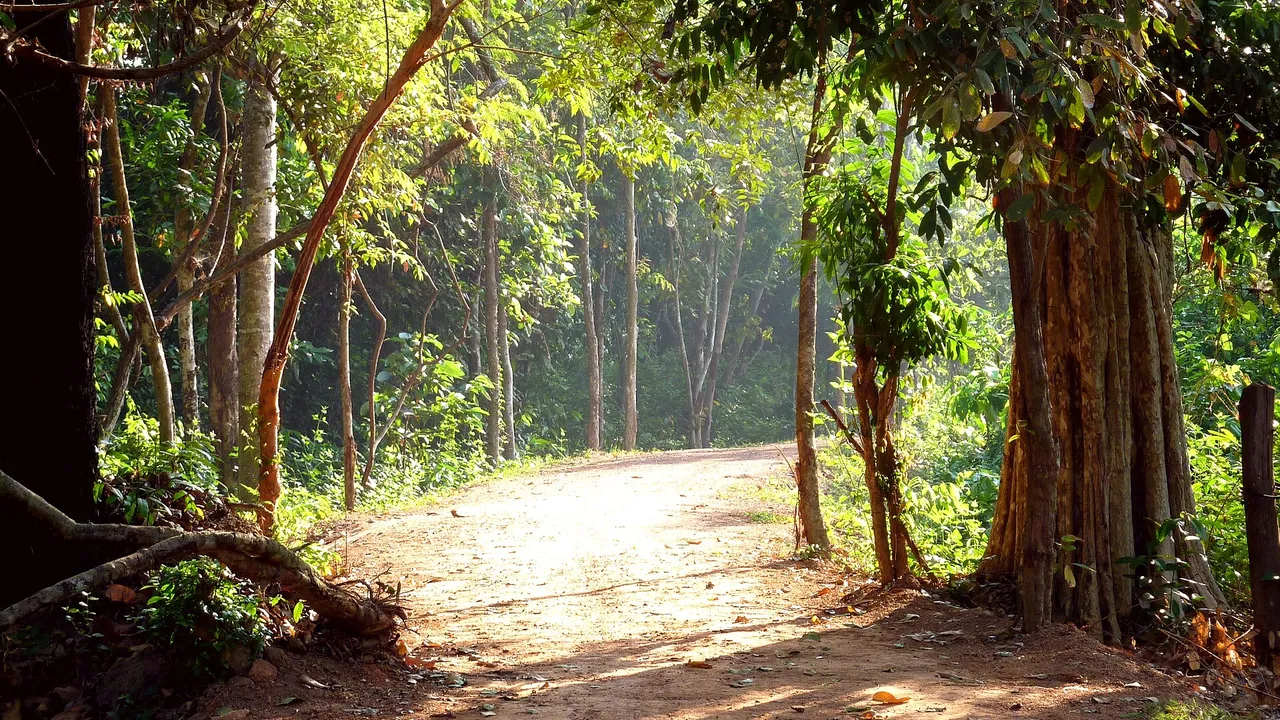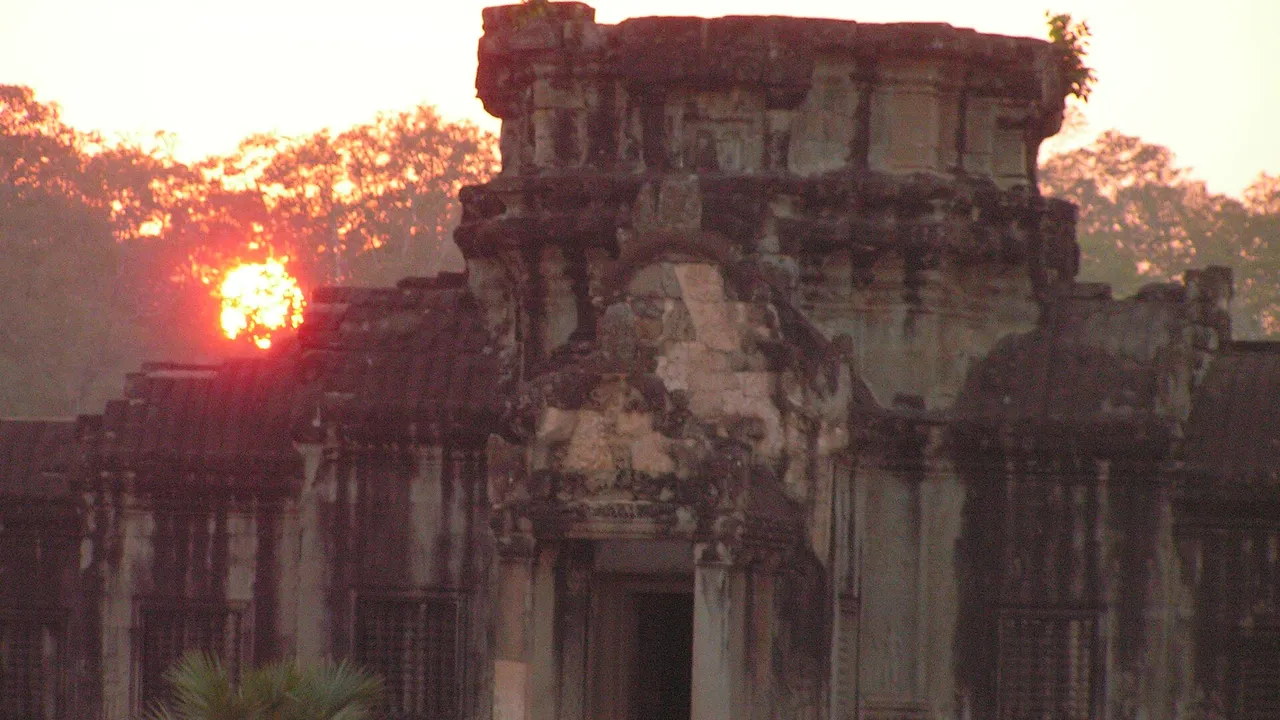
Bokor National Park, officially called Preah Monivong National Park, is the green mountain you see behind Kampot. Its plateau sits roughly 1,000 metres above the sea, and the air up there is cooler, often misty and sometimes cloudy even when the coast is sunny. Travellers come for the old French hill station, the ruined buildings, a very large statue, a two-level waterfall and far views over the Gulf of Thailand.
This guide explains the history in simple terms, the main stops in a sensible order, how to get there from Kampot, what it costs and what to know before you go. It is a half-day to full-day trip and fits well with our general Kampot travel guide.
Bokor at a Glance
The road climbs for around 30 km from the foothill gate, so allow about an hour up.
The French built a mountain retreat here, with a grand hotel, a church and villas.
Go early, enjoy the views and be back down before dark.
A Short History of the Hill Station
In the early twentieth century, the French colonial authorities looked for cool places in the mountains where officials could rest from the heat. Bokor was chosen, and the road and the first buildings appeared in the early 1920s. The Bokor Palace hotel was inaugurated in 1925. According to the hotel’s own historical timeline, other buildings followed, including a post office, villas and a church.
The station was abandoned during the 1940s, then revived in the early 1960s under King Norodom Sihanouk, who inaugurated the “City of Bokor” in January 1962 with a casino and new hotels. After the king was deposed in 1970, the area emptied again. The Khmer Rouge took the plateau in 1972, and it stayed a conflict zone for many years. It became a national park in 1993.
Today you see layers of this past: weathered French-era buildings, a few temples and viewpoints, and large modern developments on the plateau. It is this mixture, more than any single monument, that makes the mountain interesting.
The Main Stops
Lok Yeay Mao Statue
One of the first landmarks on the way up is the statue of Lok Yeay Mao, a revered guardian figure in Cambodian belief, often associated with protecting travellers. The statue is about 29 metres tall. The Bokor Palace timeline says that construction began in February 2010 and was completed in May 2012. It is a popular place to stop, with wide views over the countryside when the sky is clear.
The Old Catholic Church
The weathered French church on the plateau is one of the most photographed sights. Its stone walls are stained and mossy, and the open windows frame the mist. You can usually walk around it, but treat it with care, because the structure is old. Please do not climb on walls or enter areas that look unsafe.
Le Bokor Palace
The old hotel and casino building from 1925 has been restored and reopened as a hotel. Visitor access has changed over the years, so do not count on going inside. You can admire the building and its setting from outside, and if you are interested in the interior, check with the property directly before you go.
The Black Palace
The Black Palace, called Damnak Sla Khmao in Khmer, was a residence for King Sisowath Monivong, built in 1936 according to the hotel’s timeline. Much of it is now an empty shell, but it is a quiet stop with a view, and your driver or guide can explain its story.
Wat Sampov Pram
This pagoda is known as the temple of five boats, named after the boat-shaped rocks around it. It is a working religious site, so remove your shoes where asked and cover your shoulders and knees. Our guide to temple etiquette and dress code explains the basics.
Popokvil Waterfall
Popokvil has two levels of falling water over broad rocks, a short walk from where you park. It looks best in or just after the rainy season, and it can be a thin stream in the dry months. A small fee is reported at the site, around 2,000 riel or half a dollar, but this is not published officially, so bring small notes and confirm on the day. The rocks are slippery, so wear shoes with grip and keep away from the edge.
- Book a Bokor hill station day excursion with a local driver.
- Add an English-speaking guide to explain the history on the plateau.
- Start your trip with a private airport transfer to Kampot.
How to Get There
The park turn-off is about 8 km west of Kampot on the main road. From the foothill gate, the climb is roughly 30 km on a paved but winding road, and the drive from Kampot takes about an hour. Most visitors go by private car, tuk-tuk or an organised tour. A tuk-tuk is slower and more open to sun and wind, so read our guide to tuk-tuks in Cambodia before you agree a fare. Motorbike riders should be experienced, because the road has sharp bends, and mist can make it slippery.
Many people build the visit into a longer trip along the south coast. If you are coming from the capital, see how to travel from Phnom Penh to Kampot. Note that the land crossings between Thailand and Cambodia are suspended, according to the British Foreign Office as of 18 November 2026, so check current advice if you planned to arrive by road from Thailand.
Costs and Opening Hours
Reports from local operators say that the park has had no entrance fee since toll collection on the road ended in 2017, even though the gate and booth are still there. We could not find an official notice online, so treat this as likely rather than certain and ask your driver. Your main costs are transport, food, drinks, the small waterfall fee and perhaps a toilet fee. Guided tours and private cars are priced by the operator.
The park is generally visited during daylight, roughly from 8 in the morning to 5 in the afternoon. Opening times at individual places on the plateau can differ, and restaurants and shops close early, so confirm locally and plan to leave the plateau well before dark.
The Best Time to Go
The dry season, from around November to April, gives the best chance of clear views, especially from December to February. The waterfall is weak then, however. In the green season, from around May to October, the waterfall flows well and the forest is lush, but fog and rain can hide the views. Our guide to the best time to visit Cambodia explains the seasons across the country.
Whatever the month, start early. The morning light is better, the temperatures are lower, and mist often rolls in after midday.
What to Bring
- Water, snacks and a light rain jacket, as the weather can change fast
- Sun protection and a hat for open viewpoints
- Shoes with good grip for wet rocks and uneven ground
- Small notes in riel or dollars for small fees
- A light layer, because the plateau is cooler than Kampot
- A phone with offline maps, as the signal can be weak
Combine It with Kampot
Bokor pairs well with a quiet afternoon back on the river. A visit to a farm is a good match, and our guide to Kampot pepper explains the types and how a farm visit works. For general planning on safety and common scams, see our Cambodia safety guide.
Plan Your South Coast Days
If you would like your days arranged for you, browse our Cambodia tours or short excursions.
Frequently Asked Questions
How long does a visit to Bokor take?
Allow six to seven hours with the drive and stops. It is possible to see the main sights in less time, but it feels rushed.
Is there an entrance fee?
Local operators report that there has been no park entrance fee since 2017, but we found no official notice, so ask your driver. Popokvil waterfall has a small fee of around half a dollar.
Can I go inside Bokor Palace?
The building has been restored and is now a hotel, and access for non-guests has changed over time, so do not count on going in. You can see it from outside.
When is the waterfall at its best?
During and just after the rainy season, roughly from June to November. In the dry months it can be a trickle.
Is it safe to climb on the ruins?
The old buildings are fragile, so please stay on open paths and avoid walls or areas that look unsafe.
Can I reach Kampot by land from Thailand?
Land crossings between Thailand and Cambodia are suspended as of 18 November 2026, according to the British Foreign Office, so check current advice first.
Ready to Visit Bokor?
Let a local team plan your days with trusted drivers, guides and transfers across Cambodia.
Browse Tours See Excursions