Few places live up to their reputation the way Angkor Wat does. Rising from the forest plain north of Siem Reap, with its five lotus-bud towers reflected in a wide moat, it is the largest religious monument in the world and the symbol Cambodians put proudly on their national flag. Visiting it is the highlight of almost every trip to the country.
This guide explains the history of the temple, what to look for inside, how to plan sunrise and the quieter hours, what to wear and how to buy tickets. It is based in Siem Reap, which is only about six kilometres away, and it works as the backbone of any Angkor itinerary.
Angkor Wat at a Glance
Constructed in the first half of the twelfth century as a state temple dedicated to the Hindu god Vishnu, and later used as a Buddhist temple, which it remains today.
The central tower rises about 65 metres above the ground, surrounded by four smaller towers, representing the mythical Mount Meru, home of the gods.
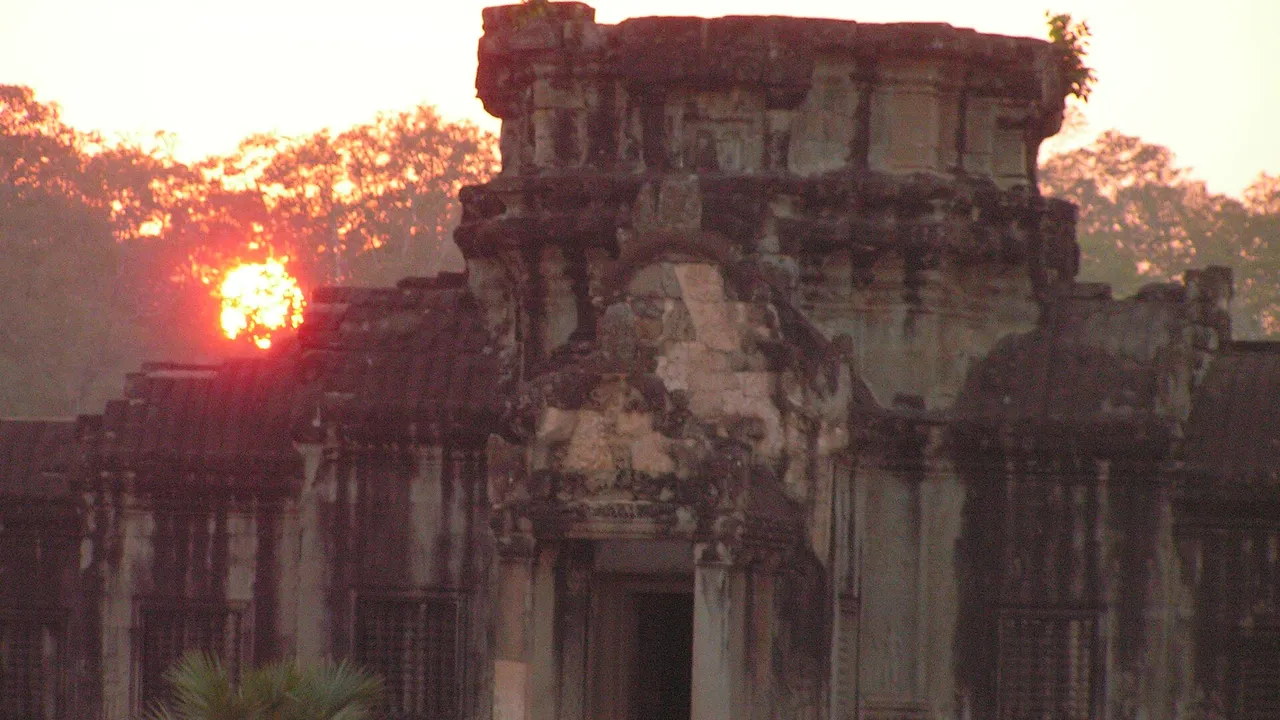
Unusually for a Khmer temple it faces west, so at sunrise the sun rises behind the towers, creating the classic silhouette.
A Short History of Angkor Wat
Angkor Wat was built under King Suryavarman II, who ruled the Khmer Empire in the first half of the twelfth century. The empire’s capital area was a vast network of cities, reservoirs and canals, and this temple was its most ambitious project. Unlike most Khmer temples, which were dedicated to Shiva, it was devoted to Vishnu, and many scholars believe it was also intended as the king’s funerary monument.
When the Khmer capital shifted away from the area in later centuries, Angkor Wat never fully disappeared. Buddhist monks continued to maintain it, which is one reason it is better preserved than most temples in the region. Today it is still an active place of worship, so you will see monks, offerings and incense alongside the visitors.
What to See Inside
The Approach and the Moat
Walk across the long stone causeway over the moat, flanked by balustrades shaped like multi-headed serpents. The moat is about 190 metres wide, and the outer wall forms a huge rectangle around the complex. Take your time on the approach, because the view of the towers slowly growing larger is part of the experience.
The Bas-Reliefs
The outer gallery walls are covered with some of the finest stone carving in the world, stretching for hundreds of metres. Look for the Battle of Kurukshetra and the Battle of Lanka from Hindu epics, the Heaven and Hell panel and the famous Churning of the Sea of Milk, in which gods and demons pull a serpent to create the elixir of immortality. A guide brings these scenes to life.
Apsaras and Carvings
Throughout the temple you will see thousands of carved apsaras, celestial dancers, each with a slightly different hairstyle and expression. Look closely at the walls and doorways of the inner galleries to spot the details.
The Upper Level
The highest terrace, known as the Bakan, is the sacred centre of the temple and offers views over the whole complex. Access is controlled, with a queue, timed entry and a strict dress code, and it may be closed on certain Buddhist holy days, so check on the day.
- Combine sunrise with the temples on the Angkor sunrise and small circuit by tuk-tuk.
- Get the story behind the carvings with a full day at Angkor with a guide.
- Add context from a licensed English-speaking guide.
How to Do Sunrise at Angkor Wat
Sunrise is magical but busy. Plan to leave your hotel well before dawn, around 4:30 to 5:00 in the morning, so you can be at the entrance when the gates open. Head to the left or right of the first reflecting pond for a quieter spot, and stay until the light has changed, since the temple looks different every few minutes. Many visitors leave straight after the sun rises, which makes the following hour much quieter inside.
If you do not like early starts, late afternoon is a good alternative. The light turns golden, the heat eases and the galleries glow. Another option is to watch the sunset from the hilltop temple of Phnom Bakheng, though it is also popular and can be crowded.
Tickets and Opening Hours
Angkor Wat is part of the Angkor Archaeological Park, so you need an Angkor pass, which is sold at the official ticket centre on the road from Siem Reap. Passes are available for one, three or seven days and are priced in US dollars, so check the current price before you go. Your photograph is taken at purchase, and the pass is checked at each temple entrance, so keep it with you. The temple is typically open from early morning, around 5:00, until the evening, around 5:30.
What to Wear
Angkor Wat is a sacred site, and a strict dress code applies. Shoulders and knees must be covered, so wear a light shirt with sleeves and long trousers, a long skirt or knee-length shorts. A light scarf is handy. Comfortable shoes with a good grip are essential because the steps are steep and worn. Remove your hat inside the sanctuary, and be respectful of monks and worshippers.
Avoiding the Crowds
- Visit in the middle of the day while tour groups have lunch, but protect yourself from the heat
- Start with the galleries at opening time instead of the sunrise crowd
- Visit in the green season from June to October for fewer visitors
- Pick the late afternoon for softer light and fewer people
- Combine Angkor Wat with quieter temples such as Banteay Srei or Beng Mealea
- Hire a guide who knows the quieter corners and the best timing
Practical Tips
- Bring water, sun protection and a hat for outside the sanctuary
- Carry small US dollar notes for drinks and snacks
- Avoid touching carvings, since oil from hands damages the stone
- Do not climb on restricted structures
- Use only licensed guides and drivers at the temple
- Keep valuables close in crowded places
Beyond Angkor Wat
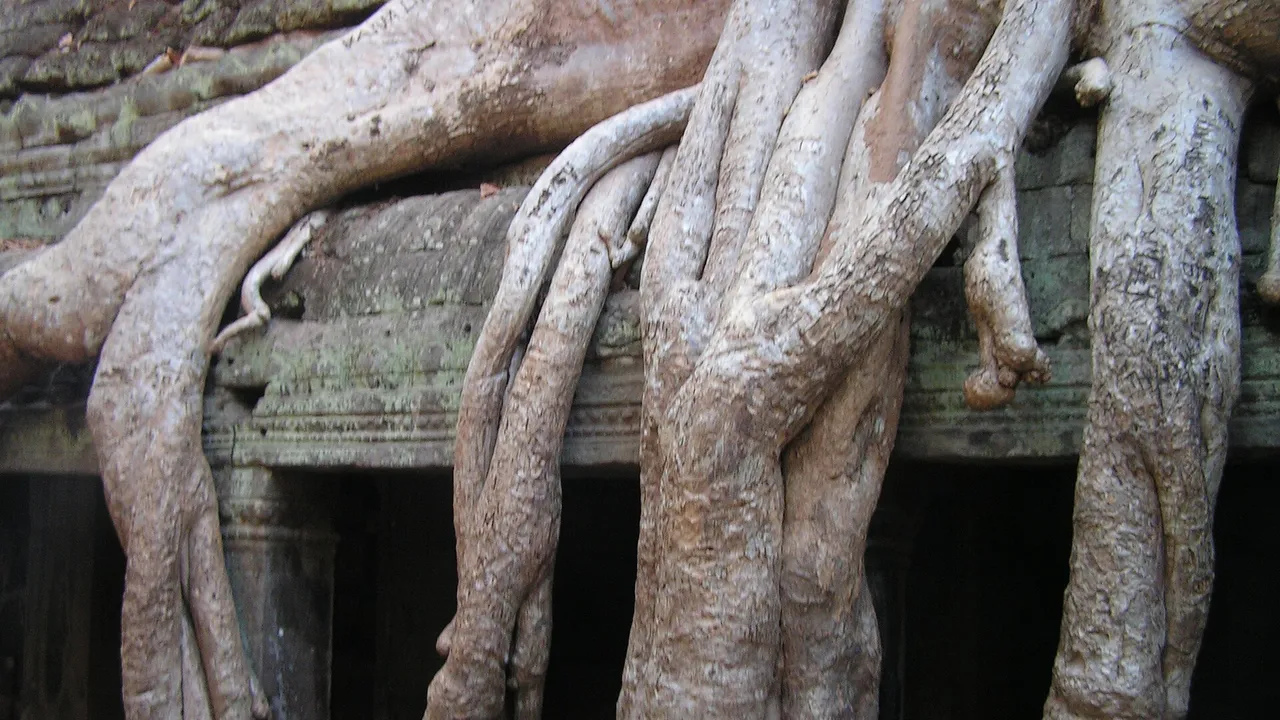
Angkor Wat is only one of dozens of temples. Most visitors continue to Angkor Thom and the Bayon, famous for its giant stone faces, and to Ta Prohm, where trees grow over the ruins. Quieter highlights include Banteay Srei and Beng Mealea. Browse our Angkor excursions or the Cambodia tours to build a trip that mixes the headline temples with quieter corners.
Frequently Asked Questions
How long should I spend at Angkor Wat?
Plan two to three hours to see the galleries and the main terraces. Add more time if you want to climb to the upper level or explore with a guide.
Is sunrise at Angkor Wat worth it?
Yes, if you can handle the early start. It is atmospheric, though crowded. The hour after sunrise is often quieter inside the temple.
What is the dress code?
Shoulders and knees must be covered. Wear light, loose clothing and comfortable shoes, and carry a scarf.
Do I need a guide?
It is not required, but a licensed guide explains the carvings and the history, which makes the visit much richer.
How far is Angkor Wat from Siem Reap?
About six kilometres, roughly 15 to 20 minutes by tuk-tuk or car.
Get Your Free Custom Cambodia Tour Quote Today!
Airport transfers, private drivers and local guides across Cambodia, arranged by our local team from your first night onwards.
Browse Multi-Day Tours Explore Short Excursions